

Why Study in Canada?
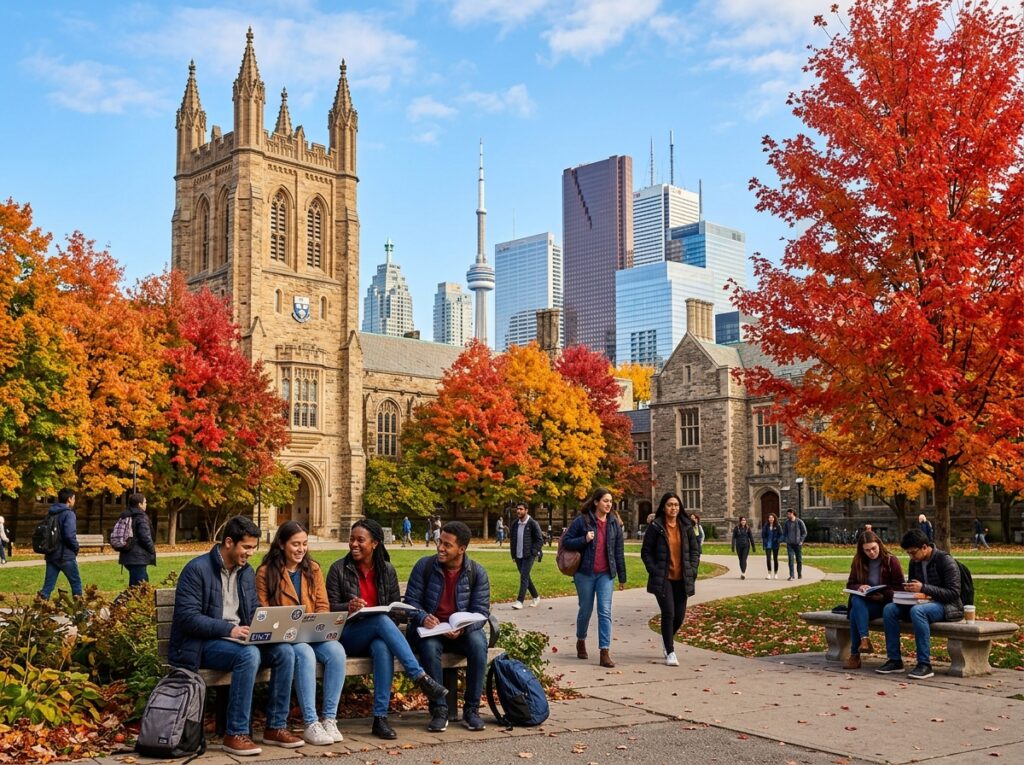
Canada is consistently ranked among the world’s top study destinations due to its exceptional education standards, safe and inclusive multicultural society, affordable living costs compared to other English-speaking nations, and welcoming immigration pathways for international graduates.
With globally recognized universities in Toronto, Vancouver, Montreal, Ottawa, and Calgary, Canada provides students with hands-on learning through integrated Co-op (Cooperative Education) work terms, allowing students to earn competitive wages while gaining direct industry experience.
Key Advantages of Studying in Canada
- Post-Graduation Work Permit (PGWP): Eligible graduates from Designated Learning Institutions (DLIs) can obtain open work permits for up to 3 years.
- Co-op Paid Internships: Work full-time in Canadian companies during designated semesters as part of your academic curriculum.
- Off-Campus Work Authorization: International students can work up to 24 hours per week during academic terms and full-time during scheduled breaks.
- Pathway to Permanent Residency (PR): Canadian education and work experience award high Comprehensive Ranking System (CRS) points under Express Entry and Provincial Nominee Programs (PNP).
- Family Accompaniment: Spouses of eligible postgraduate students can apply for an open work permit, and dependent children can attend free public schools.
Canadian Higher Education System
- Public Universities: 4-year Bachelor’s degrees, 1 to 2-year Master’s degrees, and PhD research programs emphasizing academic theory and advanced research.
- Public Colleges & Institutes of Technology: 2-year Diplomas, 3-year Advanced Diplomas, and 1-year Post-Graduate Certificates focusing directly on industry-ready technical skills and high job placement rates.
Top Canadian Universities & Colleges
Through our direct institutional partnerships with accredited Designated Learning Institutions (DLIs), SVG Education assists with admissions to:
- University of Waterloo, Simon Fraser University, University of Victoria, York University, University of Manitoba, Seneca Polytechnic, Humber College, George Brown College, Centennial College, and Fanshawe College.
Admission & Language Requirements
- Undergraduate & College Diplomas: High school diploma with minimum 65%–75% overall grade average.
- Postgraduate Programs: 3 or 4-year Bachelor’s degree with a minimum GPA of 2.70 – 3.00/4.00.
- Language Proficiency:
- IELTS Academic: 6.0 overall (no band less than 6.0) for College; 6.5 (no band less than 6.0) for University.
- PTE Academic: 58 – 65
- TOEFL iBT: 80 – 90
- Duolingo English Test (accepted by numerous colleges and universities).
Tuition Fees & Cost of Living in Canada
- College Programs (Diploma / Post-Grad Certificate): CAD $14,000 – $19,000 per year.
- University Undergraduate Programs: CAD $20,000 – $38,000 per year.
- Master’s Programs: CAD $18,000 – $35,000 per year.
- Official Cost of Living Requirement (IRCC): CAD $20,635 per year (in addition to first-year tuition).
Canadian Study Permit & IRCC Visa Process
Applications for a Canadian Study Permit require an official Letter of Acceptance (LOA) with a verified DLI number and Provincial Attestation Letter (PAL) where applicable. Our certified visa specialists guide you through all financial documentation, GIC (Guaranteed Investment Certificate) setups, and Statement of Purpose letters.